Treatments · By Cristina Silva · 9 June 2026
Healing More Than Skin: How We Treat Catheter Scars at Plasma Pen Clinic Sydney
Scarring, whether from acne, injury, or surgery, can affect confidence and skin texture for years. Plasma Pen Fibroblast Therapy offers a non-surgical path to smoother, more even skin by stimulating the body's own collagen and healing response.

How Plasma Pen Reduces Scars
The Plasma Pen device creates tiny, controlled micro-injuries on the skin's surface using plasma energy. These micro-injuries activate fibroblast cells, the cells responsible for producing collagen and elastin, triggering a natural repair process that gradually remodels scar tissue and improves skin texture over time.
Types of Scars That May Respond to Treatment
- —Acne scars (atrophic and rolling types)
- —Post-surgical scars
- —Stretch marks
- —Injury scars with surface irregularity
Healing More Than Skin: How We Treat Catheter Scars
Medical scars tell incredible stories of survival and resilience. At Plasma Pen Clinic Sydney, we frequently consult with clients who have undergone life-saving surgical operations. While they are profoundly grateful for the procedures that saved them, they are often left with highly visible reminders, specifically, deep indentation holes caused by medical catheters or surgical drains.
If you are living with a pitted scar that affects your body confidence, you are not alone. Thanks to advanced non-surgical treatments like Plasma Pen Fibroblast Therapy and clinical skin needling, we can significantly regenerate the skin and smooth out deep structural damage.
Why Do Catheter Scars Look Like Deep Pits?
When a medical catheter, central line, or abdominal drain stays in place for an extended period, it alters how the surrounding tissue heals. When the tube is removed, the skin closes from the outside in, often creating an atrophic (sunken) scar. Three main structural factors cause this deep indentation:
Loss of Subcutaneous Support
A catheter creates a physical tunnel through the skin layers. Once removed, if the underlying fat and tissue remain separated, the top layer of skin literally drops into the empty space.
Fibrous Tethering Bands
As the deep tunnel tries to heal, the body creates tough, chaotic bands of scar tissue beneath the surface. These bands act like anchors, pulling the surface skin downward and locking the indentation into place.
Collagen Underproduction
Localised friction, movement, or minor inflammation while the catheter was in place can stall the body's natural dermal rebuilding process. The skin fails to produce enough collagen to fill the pit back up.
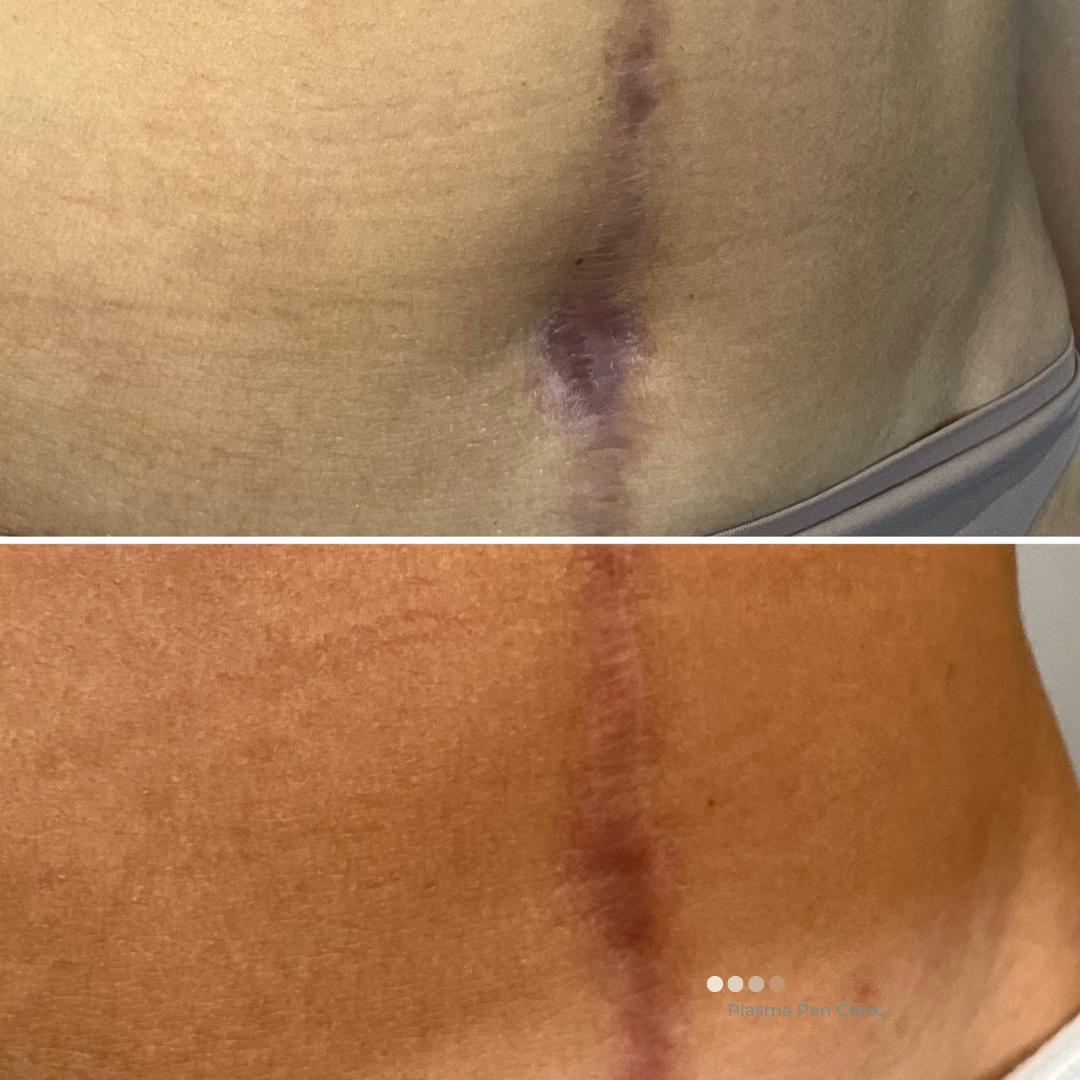
Case Study: Reclaiming Confidence with Fibroblast and Skin Needling
We recently treated a client with a deep indentation on her body caused by a life-saving catheter application. To lift the sunken tissue and smooth out the surface contour, we developed a targeted, multi-modality treatment plan combining two clinical sessions.
Session 01
Plasma Pen Fibroblast Therapy
The Plasma Pen uses electrical energy to create a precise plasma arc just above the skin. For a pitted scar, this does two crucial things: it immediately contracts the skin matrix around the edges of the indentation to shrink its diameter, and it triggers a long-term healing cascade in the dermis, forcing the body to produce fresh, tightly woven collagen and elastin fibres directly inside the crater.
Session 02
Professional Skin Needling
Clinical skin needling complements the Plasma Pen by mechanically penetrating the scar tissue to break up the stubborn fibrous bands beneath the surface. Once these bands are released, the tethered skin is free to rise. The micro-channels also stimulate a secondary surge of localised growth factors, plumping the tissue from the inside out.
By combining these two treatments over two sessions, we successfully kickstarted deep cellular regeneration, drastically reduced the depth of the indentation, and helped our client feel comfortable in her skin again.
Your Options for Deep Scar Treatment in Sydney
While some individuals opt for invasive procedures such as surgical scar excision, subcision needles, or temporary dermal fillers, non-surgical plasma therapy offers a highly effective, low-risk alternative with long-lasting structural results. At Plasma Pen Clinic Sydney, we do not believe in a one-size-fits-all approach and every scar is unique, depending on its age, depth, and location on the body.
What to Expect During Treatment
A topical numbing cream is applied before treatment to minimise discomfort. The Plasma Pen is then used to place precise treatment points across the scar area. Small carbon crusts form as part of the healing process and fall away naturally over 7–14 days as new skin develops beneath.
Results and Recovery
Visible healing typically occurs within the first two weeks. Collagen production continues beneath the surface for several weeks and months after treatment, meaning results develop gradually and naturally. Multiple sessions may be recommended depending on scar depth and skin response.
Take the First Step: Book a Video Consultation
Ready to smooth out a surgical scar, catheter pit, or injury indentation? You do not have to leave the comfort of your home to get expert advice. We offer comprehensive virtual video consultations for clients across Sydney and New South Wales.
Don't let a reminder of the past dictate how you feel about your body today.
Before & After